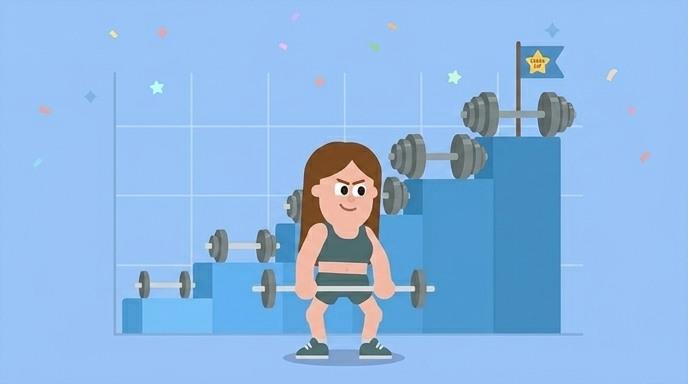
Progressive Overload Explained Without the Bro Science
The five real ways to apply progressive overload, the mistakes that stall progress, and how to track it without spreadsheets.
Progressive overload is the most repeated phrase in fitness — and the most misunderstood. The bro-science version is "lift heavier every week." The real version is more nuanced and forgiving.
If you're trying to actually get stronger without injury, this is the explanation you should have been given on day one.
What progressive overload actually is
A gradual increase of training stimulus so your body has a reason to keep adapting. Without it, you plateau within weeks.
The key word is gradual. Sudden jumps are why most beginners hurt themselves in month two. For fundamentals, see our beginner gym guide.
The 5 ways to apply progressive overload
- Weight: add 2.5–5kg when current load feels controlled.
- Reps: same weight, one more rep.
- Sets: add a fourth working set when three feel easy.
- Tempo: slow the eccentric to 3 seconds.
- Range of motion: deeper squats, fuller pulls.
Push only one variable at a time.
Common mistakes
- Adding weight every session
- Sacrificing form for load
- Ignoring recovery — see muscle recovery time by group
- No tracking
How to track it without spreadsheets
You only need to know one thing each session: did I do more than last time?
- An app that surfaces last session automatically
- Or a notebook with three numbers per exercise
For load math, our one-rep max calculator turns any working set into a usable percentage.
Why most apps ignore it
Most workout apps are libraries with a logger bolted on. They don't prescribe progression.
How AI plans handle progression
A good AI plan reads your last session, adjusts loads, swaps exercises, and pushes the right variable at the right time. That's how Fytly's auto-progression works.
Frequently asked questions
How fast should I add weight?
When you can hit the top of your rep range with clean form. Usually 1–3 weeks for beginners.
Is progressive overload only for strength training?
No. Runners overload through distance, pace, and elevation.
What if I can't add weight every week?
Use reps, sets, tempo, or range of motion.