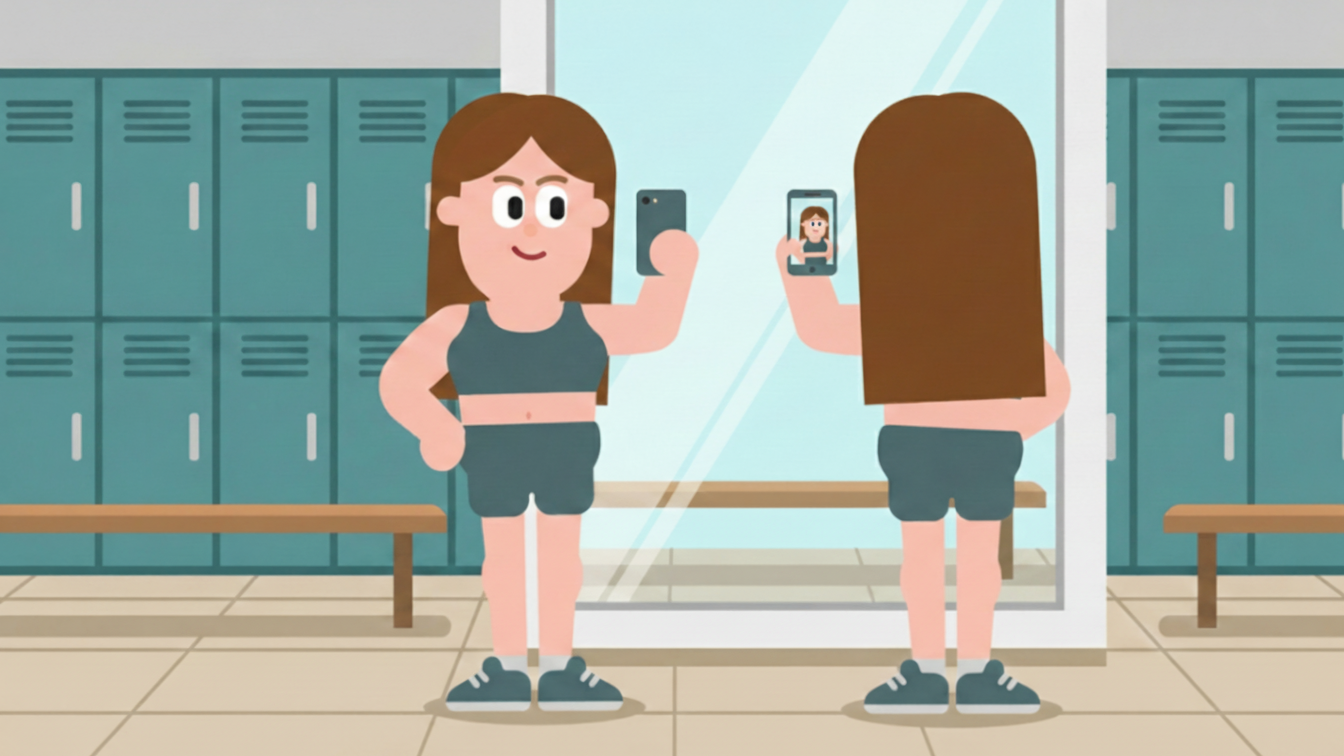
Realistic Fitness Results: When and How Does Progress Become Visible?
Learn realistic timelines for visible fitness progress based on peer-reviewed research. Understand when strength, cardio, and body composition changes show up.
Most people start training with a vague promise in their head: "In a few weeks, I want to see a difference."
Then reality hits: the mirror looks almost the same, the scale bounces up and down, and motivation tanks.
The truth is: your body is changing long before your mirror clearly shows it – but different types of progress show up on different timelines. Strength, cardio fitness, body fat, muscle size, and "how you feel" don't move on the same schedule.
This article breaks down realistic timelines for visible progress, based on peer-reviewed research, and how to structure your training so you don't quit three weeks before things start to show.
"You're usually changing faster on the inside than you can see on the outside."
1. What "results" are we actually talking about?
"Results" is vague. Let's separate it into things you can track:
Performance
- How much weight you can lift
- How many reps you can do
- How far or fast you can run / cycle
Cardio fitness
- How hard your heart and lungs have to work for the same effort
- VO₂max (lab measure of aerobic capacity)
Body composition
- Body fat percentage
- Muscle mass and muscle thickness
Appearance
- How defined muscles look
- Waist, hip, and clothing fit
Health / how you feel
- Energy, sleep, mood
- Resting heart rate, blood pressure (if you're tracking with a pro)
Different systems adapt at different speeds. Strength can jump quickly from neural adaptations. Muscle size and fat loss are slower and noisier. Cardio fitness usually sits somewhere in the middle.

2. Big picture: realistic timelines (for most beginners / returners)
Assuming:
- You train 3-4×/week,
- You follow established guidelines,
- Your sleep and food are "okay", not perfect,
then a realistic average timeline for many adults looks like this:
1–2 weeks
- You may feel less "wrecked" after sessions, slightly better energy and mood.
- No obvious visual change yet – that's normal.
3–4 weeks
- Noticeable strength gains (e.g., more reps, more weight, easier stairs).
- Workouts feel more coordinated and less awkward.
- Mirror changes still subtle.
6–8 weeks
- Cardio starts to feel clearly easier at the same pace.
- First visible changes for many: waist slightly smaller, muscles look a bit "fuller", clothes fit differently.
- Photos side-by-side start to show something.
12 weeks (≈3 months)
- Strength and VO₂max can improve meaningfully compared with baseline in structured programs.
- Body fat and muscle mass shifts are often noticeable to other people, not just you.
6–12+ months
- Bigger visible changes in body composition and performance.
- This is where "you look like a different person" usually lives, not in week 4.
You can absolutely notice something sooner – especially performance – but expecting a full "before/after" in 3–4 weeks is fantasy.
3. Strength: when does the bar actually feel lighter?
What the research says
Resistance training studies in previously untrained adults show:
- Training 2–3×/week with 8–12 rep sets can produce significant strength increases within 2–4 weeks, with continued gains across 12 weeks.
- In one 12-week trial where men and women trained whole body 3×/week:
- Leg extension strength increased significantly by week 2–4,
- Chest press strength increased by week 4–6,
- Final 12-week strength gains were around 19–27% in key lifts.
The early jump is mostly neural:
- Your nervous system gets better at recruiting muscle fibers.
- Technique improves.
- You stop "wasting" effort with poor coordination.
Realistic expectation
- Weeks 1–2: weights feel less awkward, soreness drops.
- Weeks 3–4: you can add a bit of weight, or more reps, almost every session.
- Weeks 6–12: progress slows slightly but is still very real; you may lift 15–30% more than when you started.
You often feel these gains before you see more muscle.

4. Muscle size & visible "tone": why it takes longer
Hypertrophy (muscle growth) is slower and easier to miss in the mirror, especially if you also have fat to lose.
In controlled trials:
- Ultrasound and MRI can detect significant increases in muscle thickness after ~6 weeks of progressive strength training, especially in upper-body muscles, with further increases over 10–12 weeks.
- 10–12 weeks of strength training in older adults also produces measurable hypertrophy on imaging, even if the visual change is modest.
But you don't see this 1:1 in the mirror because:
- A few millimeters of muscle gain is a big deal on ultrasound, but subtle visually.
- If body fat is stable (or up), extra muscle is partially "covered".
Realistic expectation
- Weeks 1–4: don't obsess over arm definition. Focus on performance.
- Weeks 6–8: some people notice slightly fuller muscles (shoulders, arms, glutes) in good lighting or photos.
- Weeks 12+: consistent training and enough protein make muscular changes more obvious, especially when combined with even a modest fat loss.
If you're new to lifting, "noticeable" muscle size for you and others is more of a 3–12 month game, depending on diet, genetics, and training quality – not 3 weeks.
5. How to know you're on track (before the mirror agrees)
Instead of "Do I look different yet?" ask:
- Am I stronger than a month ago?
More reps at the same weight, or more weight for the same reps. - Is my cardio easier?
Lower heart rate, shorter recovery between intervals, longer distance in the same time. - Is my behaviour more consistent?
Fewer skipped workouts, more steps, better sleep. - Do my clothes fit differently?
Looser at the waist, tighter at the shoulders/glutes.
6. Where FytlY fits: 84 days of structured, realistic change
FytlY's 84-day reset and AI-Coach is built on the same principles as the research:
- It expects real change to take weeks to months, not days.
- It mixes strength, cardio, stretching and habit tracking rather than chasing one metric.
- It keeps your streak alive if you do at least one healthy habit (steps, water, sleep, etc.) on days you can't train – because behaviour consistency is what drives long-term results.
- It makes your personalized workout plan feel like a video game.
Instead of guessing "Am I doing enough?", you see:
- Daily micro-quests
- A clear "Day X of 84" journey so you know where you are
- A system that nudges you through the exact time window where most people quit – roughly weeks 3–8 – just before the visible changes usually start to compound.
You can't fast-forward biology, but you can work on yourself, because consistency is the key.