Why Most Fitness Apps Fail You (And What a Good One Looks Like)
Most fitness apps are glorified spreadsheets. They track everything and change nothing. Here's why — and what a good one actually looks like in 2026.
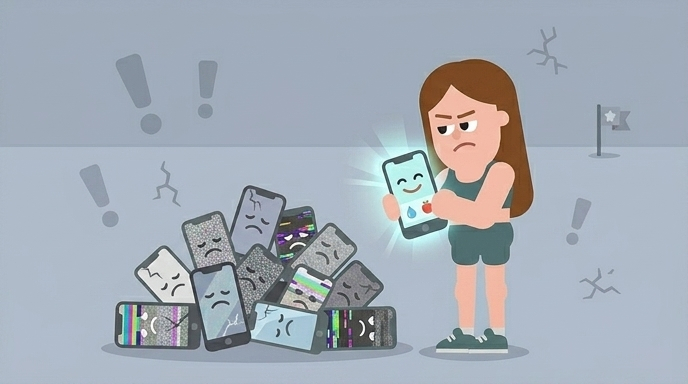
Open the App Store, search "fitness", and you get 100,000 results. Open your phone, and you probably have three or four installed already. So why is the global population less active than ever? The honest answer: most fitness apps are built to be downloaded, not used.
If you''re trying to find the best fitness app in 2026, the marketing won''t help you — every app claims AI, personalization, and "results in 30 days". This is a critical breakdown of where they fail, and what a genuinely good one looks like.
The data logging trap
The first generation of fitness apps was built around one assumption: if you measure it, you''ll improve it. Steps, calories, heart rate, sleep, sets, reps, RPE. More data, better outcomes.
The behaviour science says otherwise. A large review in The Lancet Digital Health on activity-tracker interventions found small short-term effects on physical activity that largely disappeared within 6 months. Tracking is a mirror, not a coach. Mirrors don''t change behaviour — feedback loops, identity, and consequences do.
Why tracking is not adherence
Adherence — the boring, unsexy word that decides every fitness outcome — has almost nothing to do with how well an app logs. It depends on three things research keeps flagging:
- Friction: how many taps between opening the app and starting today''s workout.
- Identity: whether the app makes you feel like the kind of person who trains, or a person who is failing a tracker.
- Consequence: whether skipping a session has weight (a streak, a quest, a teammate) or vanishes silently.
Most apps optimize the wrong layer. They polish the dashboard while leaving the friction at 12 taps deep. We unpacked this dynamic in detail in why motivation fails (and what to use instead).
The missing pieces
When you audit the top 20 fitness apps against the behaviour-change literature, the same gaps show up over and over.
1. No real gamification
Badges aren''t games. Real gamification is variable rewards, meaningful progression, and social stakes. The reason Duolingo built a 70 million daily-active habit isn''t streak emojis — it''s the architecture underneath them. We covered the parallel for fitness in Duolingo for fitness.
2. Recovery is invisible
Most apps will let you train chest five days in a row and never warn you. There''s no model of what your body actually did yesterday, so today''s plan ignores it. A good app treats recovery as a first-class citizen — not a wearable upsell.
3. AI without structure
"AI-generated plans" are everywhere in 2026, and most of them are an LLM wrapper that produces a believable-looking program with no progressive overload, no deload weeks, and no rationale. The honest tradeoffs are spelled out in AI workout plans: what they get right and wrong.
4. No real social layer
A leaderboard with strangers isn''t community. The strongest predictor of long-term adherence is training with people who notice when you don''t show up. Most apps replace this with notifications, which the brain learns to ignore inside a week.
What a good fitness app actually looks like
If you''re evaluating apps, ignore the screenshots and check for these:
- One-tap to start today''s session. If you have to think, you''ve already lost.
- A weekly plan, not a workout library. Choice paralysis is the silent killer of adherence.
- Progressive overload baked in. The app should know what you lifted last week and tell you what to do this week.
- Recovery-aware programming. Sessions adapt when you''ve trained the same muscle recently or skipped sleep.
- Game-like consequences. Streaks, quests, levels — feedback loops that make today matter.
- Honest data. Not "you burned 1,200 calories" theatre. Real, calibrated estimates and clear ranges. Our TDEE calculator is a good baseline for what calibrated looks like.
- No upsell wall on the basics. Tracking your training shouldn''t be premium.
How Fytly was built around adherence
Fytly started from one question: what would a fitness app look like if adherence — not data — was the only success metric? Every design decision flows from there.
- Today''s session is the home screen. No tabs to dig through.
- AI plans are generated against a structured template (full-body, push-pull-legs, 3-day split) with built-in progression and deloads — not a freeform LLM guess.
- Quests, streaks, and team challenges are core mechanics, not cosmetic.
- Recovery and sleep modify tomorrow''s plan automatically.
- Coach add-ons exist for people who want a human in the loop, but the core training engine is free.
If you''ve quit five fitness apps in three years, the apps were the problem, not you. The next one you try should be designed to make showing up the easiest thing you do all day. That''s the bar.
Frequently asked questions
- What makes a fitness app actually effective?
- Effectiveness comes from adherence, not features. The apps that work reduce friction (one tap to start), have built-in progression, treat recovery as part of the plan, and use game-like feedback loops that make today's session matter. Tracking alone changes very little long-term.
- Are AI workout plans worth it?
- Only if the AI is constrained by a real programming framework. Generic LLM-generated plans often miss progressive overload, deload weeks, and recovery logic. AI plans built on structured templates with proper progression rules can be excellent and save hours of programming time.
- Why do I keep quitting fitness apps?
- Almost always because of friction and lack of meaningful feedback. If opening the app and starting a workout takes more than two taps, or if skipping a day has no consequence in the app world, the brain learns the app is optional. The best apps make showing up feel inevitable.